Thailand Promotes Harmony Model To Boost Agricultural Product Value
Thailand is promoting the Harmony Model to transform agriculture from volume-based production to premium products, using Aromatic Farm in Ratchaburi as a prototype that helps farmers secure consistent buyers while meeting quality standards
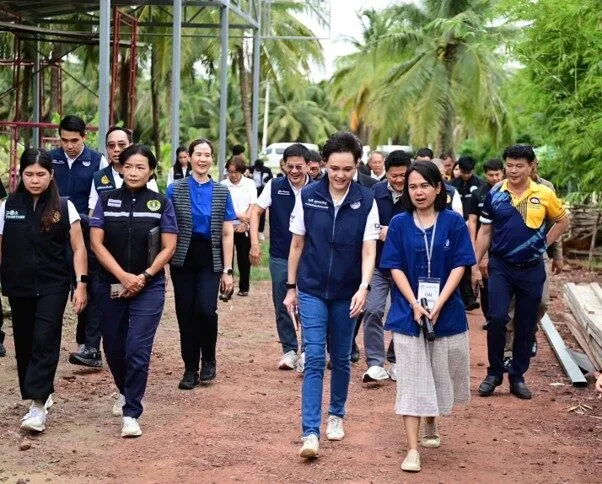
Deputy Prime Minister and Commerce Minister Supachee Pasmapunpipat has revealed the results of a recent field visit to Ratchaburi province, where she observed the high-value aromatic coconut development model of Aromatic Farm, an example of elevating Thai agriculture from volume-based to premium products. The Commerce Ministry is promoting the Harmony Model as a blueprint for upgrading the country's agricultural industry across the entire supply chain by encouraging farmers to produce appropriate crops, find market buyers, and ensure products meet food security needs.
Under this model, farmers will be incentivized to produce according to market demand while meeting quality standards and quantity targets. Standards may include Participatory Guarantee Systems (PGS) for community-certified organic farming, Good Agricultural Practices (GAP), organic certification, or geographic indication (GI) registration. Once farmers produce the right products and secure markets, they must expand membership while motivating participants with incentives to maintain quality standards and continuously seek new markets to address the typical blind spot where farmers focus only on production.
Regarding Aromatic Farm, which serves as a prototype for the Harmony Model concept, Supachee noted discussions with founder Nuallaew Thedkiatkul revealed that the farm receives year-round orders from prestigious national companies, hotels, and organizations with strong business growth. The farmer network operates cohesively and has added value through circular economy initiatives and valued waste concepts to create price stability and sustainable income. Most notably, it has partnered with government agencies to pursue carbon credit opportunities.
The operation has also established farmer networks with training programs aligned toward the shared goal of producing quality goods in agreed quantities. A central platform provides knowledge to members from upstream (cultivation and care), midstream (water-splitting techniques, meat extraction, product processing including gelatin, yogurt, and ice cream), with follow-up monitoring before new members join Aromatic Farm. Simultaneously, price stability and sustainable farmer income are achieved through circular economy promotion, emphasizing valued waste by repurposing coconut shells, husks, and residual materials into biochar and value-added products like packaging materials, fuel, eco-friendly products, and alternative energy in collaboration with the National Science and Technology Development Agency (NSTDA) and the National Metal and Materials Technology Center (MTEC), while facilitating access to funding through the Thai SME Development Bank.