Supachai Unites Three Ministries to Overhaul Agricultural Product Dashboard Pilot in Ayutthaya
Deputy PM Supachai is piloting an agricultural dashboard in Ayutthaya that combines satellite data and farmer input to forecast rice production and enable data-driven supply management across Thailand's value chain.
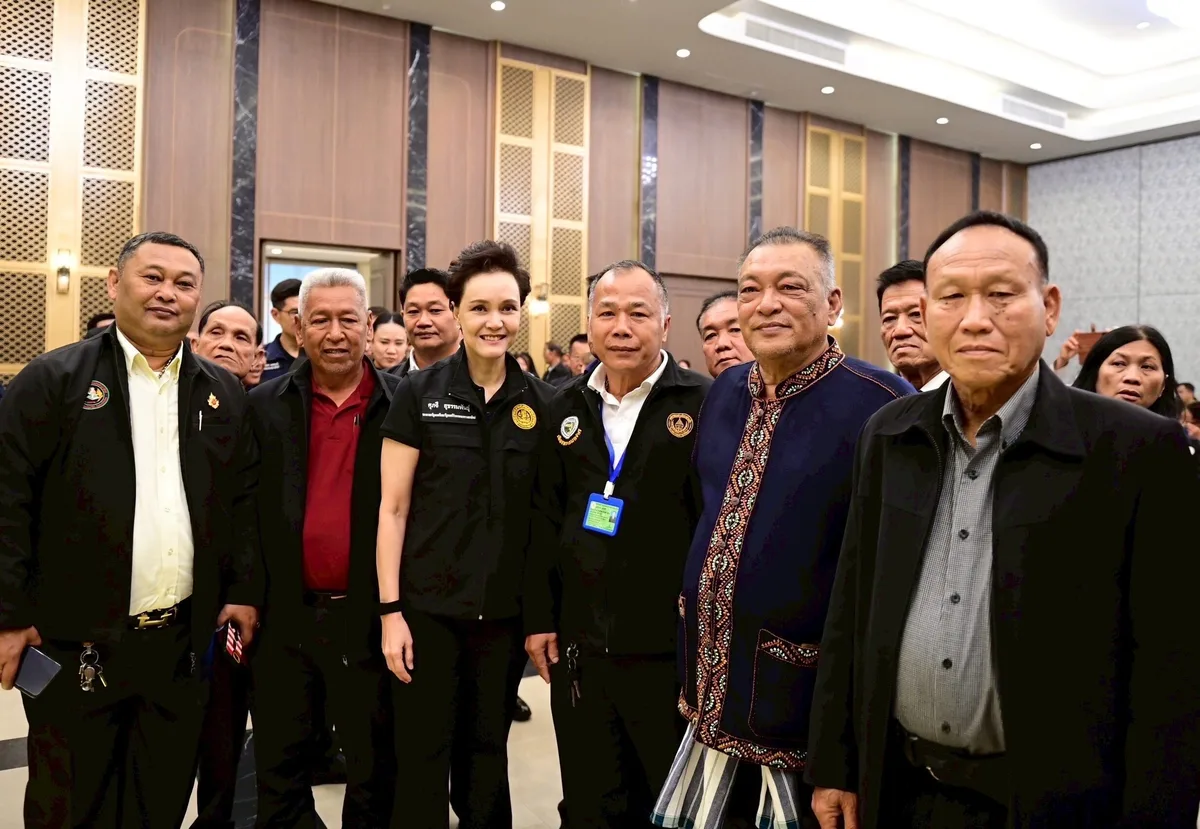
Deputy Prime Minister and Commerce Minister Supachai Panitchpakdi has unveiled a policy to elevate data analytics in managing agricultural supply and demand systematically across the entire value chain, from production through distribution. The initiative focuses on using a rice production forecasting dashboard to enable accurate monitoring of regional conditions and precise planning of production, marketing, and product absorption. "We must shift from reactive problem-solving to proactive, data-driven management, with the dashboard serving as the critical tool for linking our entire information system to enable accurate and timely decision-making," Supachai stated.
The Office of Trade Policy and Strategy, in collaboration with the Ayutthaya Provincial Commerce Office, conducted field verification on May 12, 2025 in two districts—Phachi and Uthai—to advance the dashboard pilot program using satellite data from the Geo-Informatics and Space Technology Development Agency (GISTDA). The initiative integrates data from the Ministry of Agriculture and Cooperatives, the Office of Agricultural Economics, the Department of Agricultural Extension, and local farmers to create a unified information system supporting policy decisions.
The field assessment identified three key priorities: improving forecast accuracy by integrating rice variety data and field survey information; consolidating rice variety databases into a single system for production planning and targeted market positioning; and leveraging shared databases to enable agriculture officials to manage production and quality precisely while commerce officials can forecast market trends and prepare contingency measures in advance. Farmers confirmed that satellite data accurately reflects planting timelines, validating the dashboard's development potential.
The ministries aim to deliver concrete results within two months for operational field-level deployment. Future phases will incorporate AI technology and the Prism Model (Precision Rice Intelligence for Strategy & Market Model) to analyze global rice demand, assess market potential, identify trade barriers, and formulate proactive export strategies tailored to specific consumer groups.
The successful Ayutthaya pilot is planned to expand nationwide across all 76 provinces, transforming rice management through Big Data and AI technologies to enable real-time production monitoring and dynamic supply-demand management.