Legislator Questions If Amnesty Bill Covers Senate Election Fraud
A Prachathai MP questioned whether an amnesty bill explicitly covers senate election fraud cases, warning that ambiguous wording could allow authorities to selectively apply the law to benefit certain individuals.
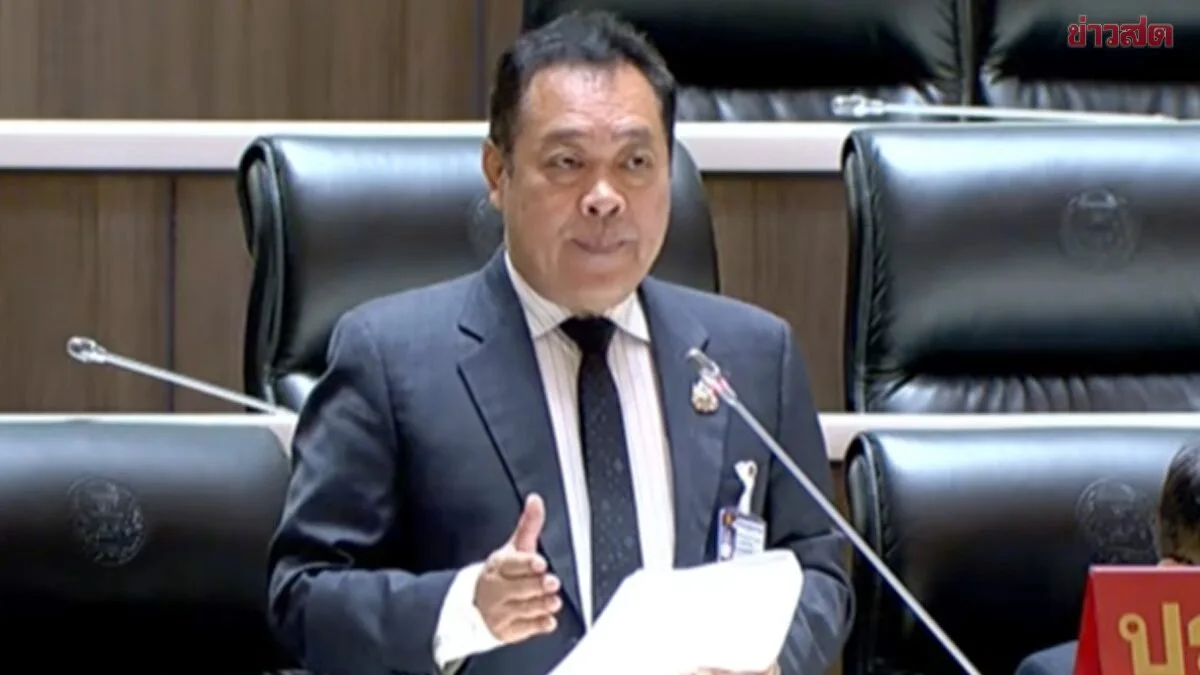
On July 8, 2025 at 5:05 p.m., Pol. Lt. Col. Tawee Sodsong, a Prachathai Party list MP, debated that this is crucial legislation affecting national unity, warning that ambiguous wording could become a private tool for certain individuals. The Senate's amended version includes violations under the Constitutional Organic Act on Senate Acquisition, B.E. 2561, within parentheses excluding fraud-related, unfair election, and false qualification offenses. Tawee questioned whether the 500-member parliament would grant amnesty for senate election fraud cases, stating this must be explicit. He noted the case is divided into two parts: the first undergoes investigation by the Election Commission with seven charges, including party officials or MPs helping senate candidates win election (Section 67 subsection one), candidates accepting party or MP assistance (Section 67 subsection two), and introducing violations under Section 36 with Section 70. The second part involves allegations of contract violations (Section 77 subsection one), solicitation and entertainment (Section 77 subsections two-three), accepting benefits (Section 79), and demanding and accepting assets (Section 81).
Tawee further stated that clear legislation should specify "amnesty for 2561 senate acquisition violations except for sections [specific numbers]," emphasizing that the Constitutional Court's ruling raises concerns about separate money laundering and bribery cases. He questioned whether amnesty for one would automatically cover related offenses investigated by the Special Investigation Bureau. Tawee warned that without clarity, this becomes a private asset of the commission and constitutes a compounded crisis. "Thai language is written, and laws must not be ambiguous or covert. Ambiguous legislation becomes private property—in this case, of this committee—creating a layered crisis," he concluded.