Kasetsart University researchers discovered five previously unknown water lily species in Thai freshwater habitats, doubling the country's known Nymphoides species count and highlighting Thailand's botanical diversity.
Researchers at Kasetsart University have discovered five previously unknown species of water lily (Nymphoides, family Menyanthaceae) in Thai waters, underscoring the country's botanical wealth and the importance of fundamental science research in educational institutions. The research team, led by Associate Professor Chalermpol Suvannapdee from the Department of Botany at Kasetsart University's Faculty of Science, identified these five new species for global science. Previously, only five Nymphoides species had been documented in Thailand, but the new study reveals the country actually hosts ten species, with five being entirely new to science. The findings have been published in the international journal Aquatic Botany in 2026.
The discovery represents a collaborative effort involving Dr. Nattapol Nobphromjaroenkul from the National Science Museum Organization (NSMO) and Professor Trevor R. Hodkinson from Trinity College Dublin, Ireland, combining expertise in plant taxonomy, morphology, and cell biology.
According to Associate Professor Chalermpol, these five newly discovered species each hold promise as decorative plants for bottle gardens, terrariums, and aquariums. The discovery emphasizes the critical need to conserve freshwater habitats that support these plants, illustrating Thailand's rich plant resources and the value of fundamental botanical research. The five species are:
1. Nymphoides chumphonense Suwanph. (Local name: Sai Ting), found in shallow freshwater areas of Chumphon and Surat Thani provinces, named after Chumphon. This species is used as traditional edible greens, served fresh with spicy dip and sold in local markets. It is classified as Endangered (EN) due to habitat loss and saltwater intrusion, with limited seed and fruit production.
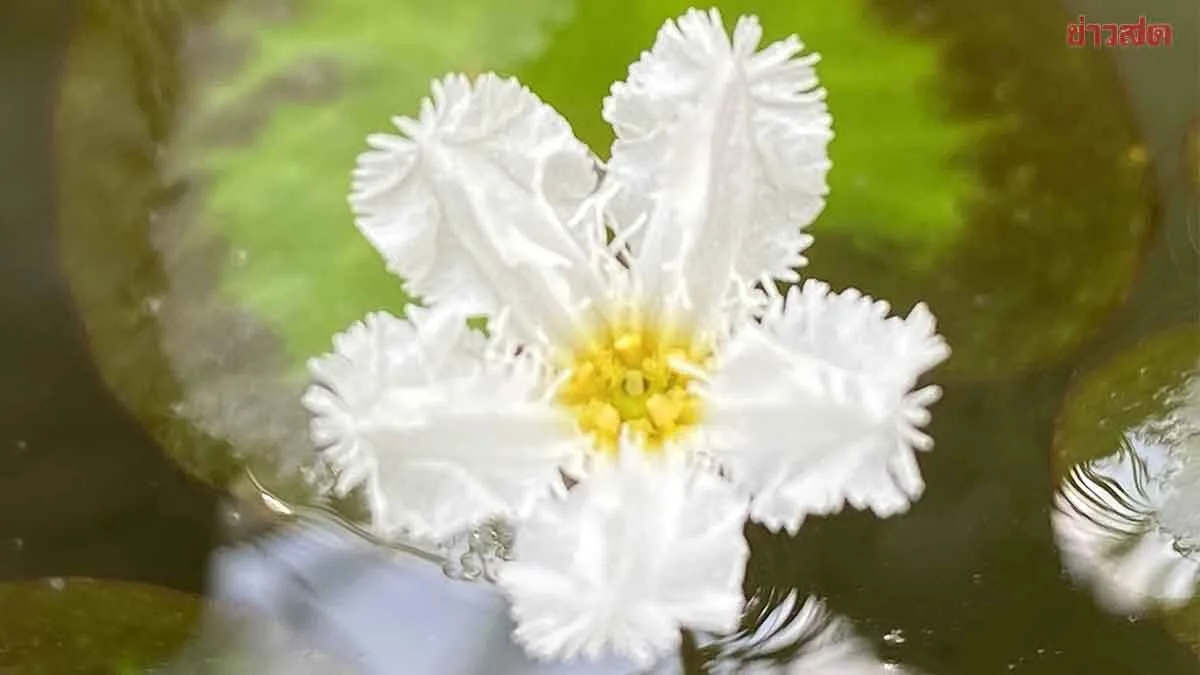
2. Nymphoides crucioides Suwanph. & Hodk. (Local name: Bua Ba Hua Luuk Sorn), found in shallow freshwater and rice paddies in Prachuap Khiri Khan and Yala provinces. Named for its cross-shaped flowers, this species has potential as a decorative plant for bottle gardens, terrariums, and aquariums, with both aquatic and terrestrial forms. It is classified as Critically Endangered (CR) due to habitat loss and herbicide use.
3. Nymphoides miniata Noppornch. & Suwanph. (Local name: Ba Chi O), the world's smallest Nymphoides species, found in shallow freshwater and rice paddies in Prachuap Khiri Khan. Named for its distinctively tiny flowers, this species is suitable for decorative aquatic gardens and terrariums. It also has aquatic and terrestrial forms and is classified as Critically Endangered (CR) due to habitat loss and herbicide application.
4. Nymphoides thailandica Suwanph. (Local name: Ba Siam), a small water lily found in shallow freshwater areas and rice paddies in Prachuap Khiri Khan, Krabi, and Yala provinces. Named after Thailand, this species shows promise as a decorative plant for bottle gardens, terrariums, and aquariums, existing in both aquatic and terrestrial forms. It is classified as Critically Endangered (CR) due to habitat destruction and herbicide use.
5. Nymphoides thungyaiense Suwanph. & Noppornch. (Local name: Dao Roda), a relatively large water lily species found in shallow freshwater habitats in Tak Province, named after its discovery location.