Lanta & News
No. 01 · ENDLESS
National

Opposition Leader Calls for PM Accountability in Parliament

Opposition leader Nattapong Rueangpanyawut demanded the Prime Minister personally present the budget and answer live parliamentary questions, citing the PM's repeated avoidance of direct accountability to lawmakers.

Opposition Leader Calls for PM Accountability in Parliament
2d ago Khaosod

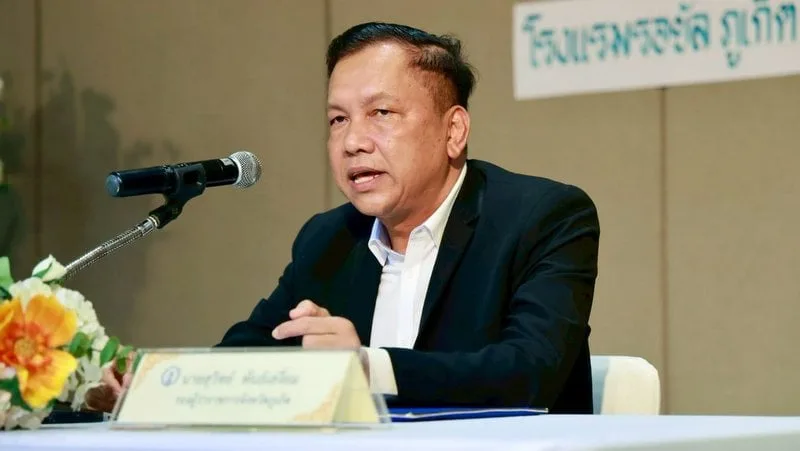
On July 3, 2025, Nattapong Rueangpanyawut, a list-based MP and leader of the People's Party opposition faction, criticized ministers for avoiding live parliamentary questioning. He noted that while the Prime Minister should answer parliamentary questions, there are only two major annual agenda items requiring his presence: the budget bill review and no-confidence debate votes. Rueangpanyawut argued the PM could manage these two occasions and should attend the 2570 fiscal year budget presentation personally. He called on the ruling coalition to coordinate with opposition to reschedule sessions if the PM and Interior Minister have international travel obligations, allowing the Premier to present the budget and answer live questions directly. "To this day, the PM has never answered live parliamentary questions posed by members multiple times," Rueangpanyawut said, urging greater accountability to parliament.

No. 01 of Read at source → Next
Community

Rare Buddha Amulets From Revered Eastern Thai Masters

Rare amulets created by revered Eastern Thai Buddhist masters in the early 20th century, including distinctive designs from Chachoengsao and Samut Songkhram, have become highly sought-after collectibles commanding premium prices among serio

Rare Buddha Amulets From Revered Eastern Thai Masters
2d ago Khaosod

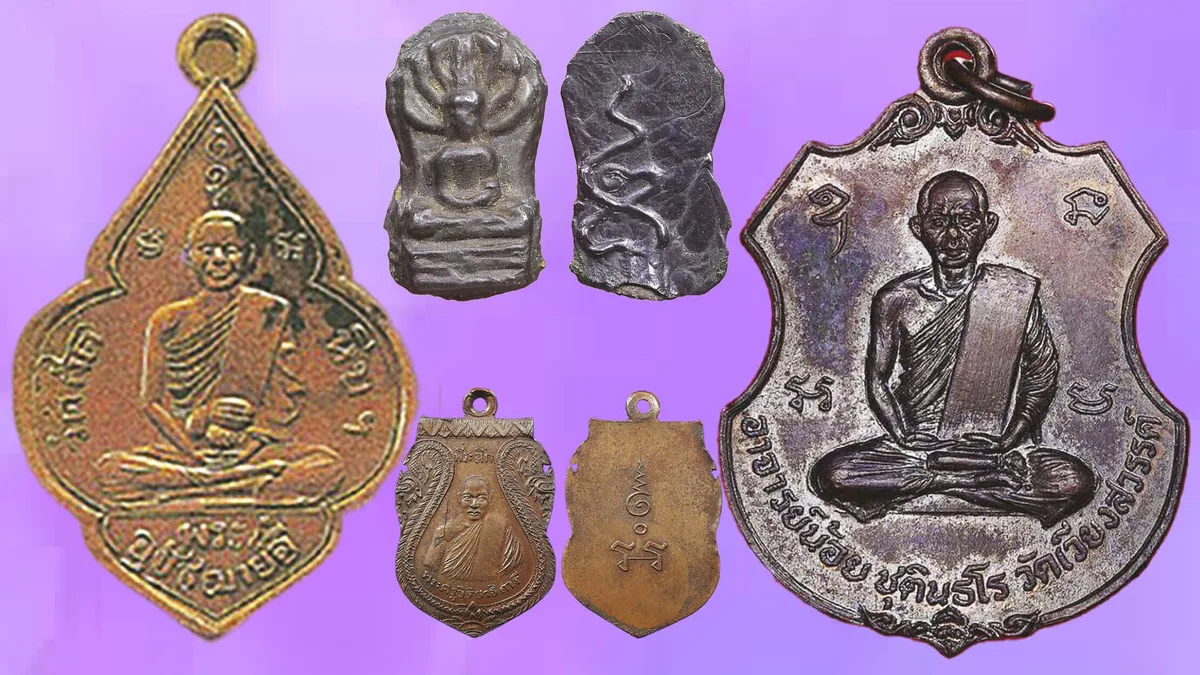
A spiritual teaching from Luang Pho Cha Subhadto of Wat Nong Pa Phong in Ubon Ratchathani states: "Following the Buddha's path brings no suffering, for His way is complete letting go of all things." Phra Kru Wor Wetmuni, known as Luang Pho Ee Buddhsaro, was a celebrated master teacher from Chachoengsao in Thailand's East who created numerous sacred amulets including talismans, yantra shirts, medals, and closed-eye Buddha images. Among his most popular pieces is the distinctive "Khao Bin" grain-shaped amulet. In 1930, Wat Satcheep commissioned portrait medals as commemorative gifts for those who contributed funds toward building the main ordination hall. Both oval and grain-shaped versions were produced, featuring a seated meditation figure with "Wat Sat" on the left and the master's name below. A yantra appears in the center, with the inscription "Memorial of the Buddha Image casting" and "B.E. 2473" on the back. This edition became highly sought-after, commanding high rental prices, and remains rare among serious collectors. Luang Pu Jai Inthasuvanno, a venerated master from Wat Sedet in Samut Songkhram, created the popular "Tamarind-Leaf Nagas" amulet in 1930 as part of a commemorative series for donors. This small brass casting features multiple designs: two-needle, single-needle, and dot varieties. The front depicts Buddha in meditation on a three-tiered base, while the back displays seven-headed nagas with protective shields. Khmer script runs along the center back. Due to limited production, this early amulet became exceptionally popular. Luang Pu Nak Punyanako of Wat Hua Hin in Prachuap Khiri Khan, a prominent historical master, created various sought-after amulets, with collectors particularly valuing his first-edition portrait medals. These Semai-shaped medals feature two handles and were created by Phra Kru Prasitthi Samnakaan (Tan Mena Jindha) of Chakravartti Rachawas Temple in Bangkok to commemorate the master's 72nd birthday. The front displays a bird-pattern border with a half-portrait facing forward, inscribed "Memorial" above and "Phra Kru Wiryaathikari" below, while the back features the Unaalom yantra and Khmer script, making it one of the most coveted medals in amulet collecting circles. Luang Pho Noi Chutinadhorn of Wat Noen Wiang in Nakhon Sawan was another renowned master whose first-edition "Tamarind-Leaf" medals, created in 1975, became highly celebrated. These copper amulets, produced in a limited run of 10,000 pieces, feature a looped bail with a seated meditation figure and yantra script, stamped with the master's name.

No. 02 of Read at source → Next
Police

Police Officer Dies By Gunshot During Video Call

A 31-year-old police officer died from a gunshot wound in Bangkok on July 2 while on a video call with a colleague, with authorities suspecting personal distress as a possible cause.

Police Officer Dies By Gunshot During Video Call
2d ago Khaosod

A 31-year-old police officer video-called a colleague before a gunshot rang out, killing him in front of his friend. His father broke into the room and was shocked to find his son dead. The incident is suspected to be related to personal distress.

On July 3, 2569 (2026), Lt. Col. Srayut Suntad, deputy investigation officer at Bang Khunthian Police Station, reported that at 8 p.m. on July 2, officers received notification of a shooting death inside a car repair shop in Bang Bon District, Bangkok. They immediately responded with forensic teams, a medical examiner from Siriraj Hospital, and volunteers from the Thai Red Cross Society.

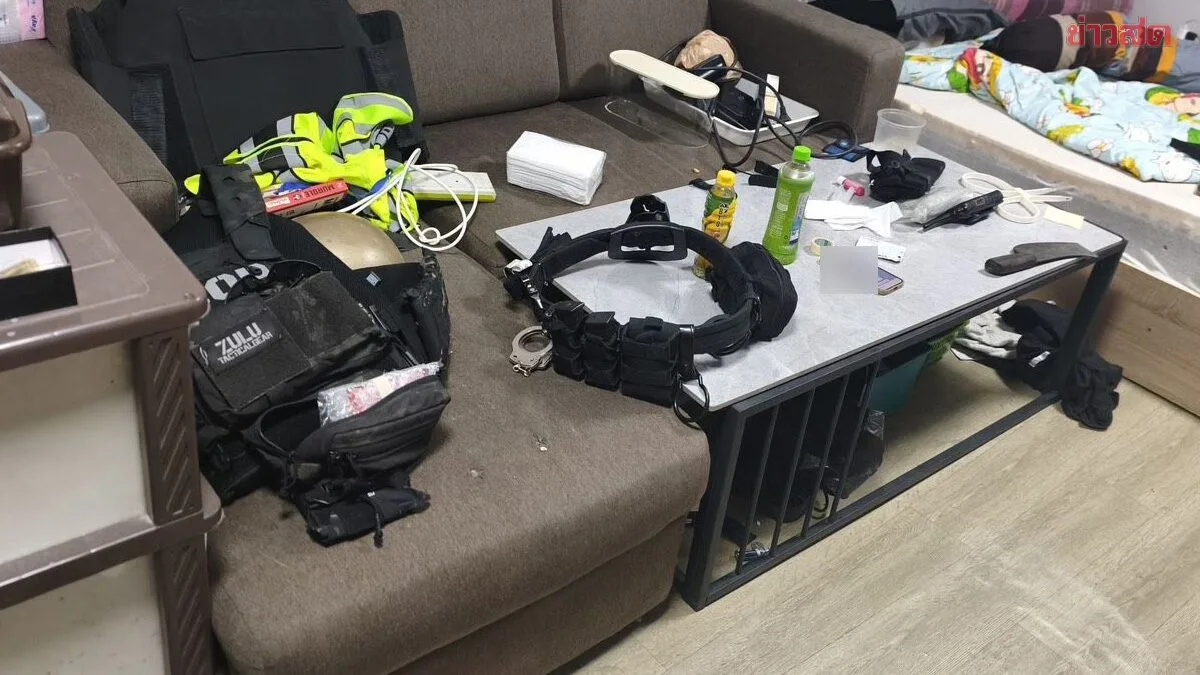
At the single-story building divided into rooms, inside what appeared to be a bedroom, officers found the body of an officer identified as S.T.O. A (alias), aged 31, a protection and suppression unit commander at a police station. The body lay face-down, wearing a blue t-shirt and black shorts, with a head wound. A 38-caliber Smith & Wesson revolver was found near his left hand.

According to the victim's father, in the early evening of July 2, the victim used his sister's phone to call his ex-girlfriend with whom he had broken up. After that, he locked himself in his room and refused to come out.

Around 8 p.m., a gunshot-like sound was heard. Shortly after, the father received a phone call from a colleague who said another officer had been video-calling the victim just before the incident occurred. The father then forced open the bedroom door and found his son dead.

Police at Bang Khunthian Station will conduct further investigation into the cause of death. The Thai Red Cross Society has been assigned to transport the body to the medical examiner at Siriraj Hospital before the family can claim it for religious funeral rites.

No. 03 of Read at source → Next
Community

The Legend of Thao Hiranya Phanasur at Mongkut Hospital

A protective forest spirit revered by King Mongkut in the early 1900s, Thao Hiranya Phanasur is now honored at Bangkok's Ramathibodi Hospital, where staff and visitors report miraculous interventions in health and personal matters.

The Legend of Thao Hiranya Phanasur at Mongkut Hospital
2d ago Khaosod

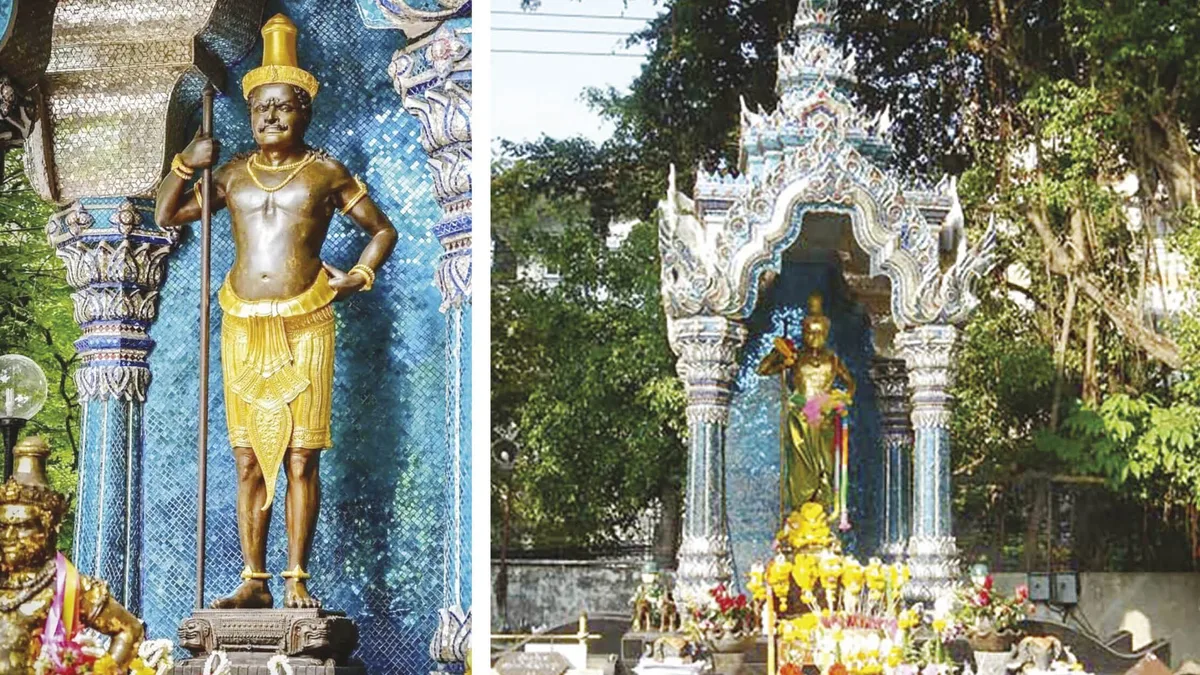
Visitors to Ramathibodi Hospital in Bangkok's Ratchathewi District encounter the shrine of Thao Hiranya Phanasur within the hospital premises. Local residents know its history well and report personal miraculous experiences. Doctors, nurses, and hospital staff show profound reverence, regularly seeking blessings before undertaking any task. Beyond medical matters, those facing various hardships—when not beyond karmic reach—report miraculous relief from disaster or success in their requests. The deity's fame has spread, drawing devotees from all directions daily.

Thao Hiranya Phanasur emerged during the reign of King Mongkut (Rama VI). "Hiranya" means silver or gold, while "Phanasur" combines "phana" (forest) and "asur" (demon), referring to a great forest spirit, also called "Thao Hiranya Hu"—"Hu" possibly from English "Who."

In 1906, while still Crown Prince, the future King Mongkut traveled through northern forests filled with dangers and diseases. When his entourage worried about threats, he reassured them, explaining that such journeys naturally attract protective deities and spirits who prevent harm to royalty and their companions.

During the journey, a senior official dreamed of a tall man named "Hiranya," a forest spirit of righteous conduct, offering protection. The Prince ordered offerings made in the forest, and meals were regularly divided as tribute. The journey proved entirely safe, with no illness or mishap.

On subsequent travels, the retinue performed ceremonies invoking this protective spirit, and many witnessed a tall, ancient-looking man accompanying the royal procession. News spread among regional governors, and veneration of Thao Hiranya Hu became widespread.

After ascending the throne as King Mongkut (Rama VI), he remembered this spirit fondly. In April 1911, he commissioned a small bronze statue (20 cm tall) dressed in ancient regalia with a ceremonial staff, naming it "Thao Hiranya Phanasur." Four such images were cast as the first edition. The King placed one on his white automobile "Napier."

No. 04 of Read at source → Next
Community

New Book Explores Buddhist Teachings As Spiritual Healing

A new book titled 'Chanting to Heal When Sick' presents Buddhist teachings as spiritual medicine for physical and mental wellbeing, organized into three components: identifying the teachings, explaining their practical application, and desc

New Book Explores Buddhist Teachings As Spiritual Healing
2d ago Khaosod

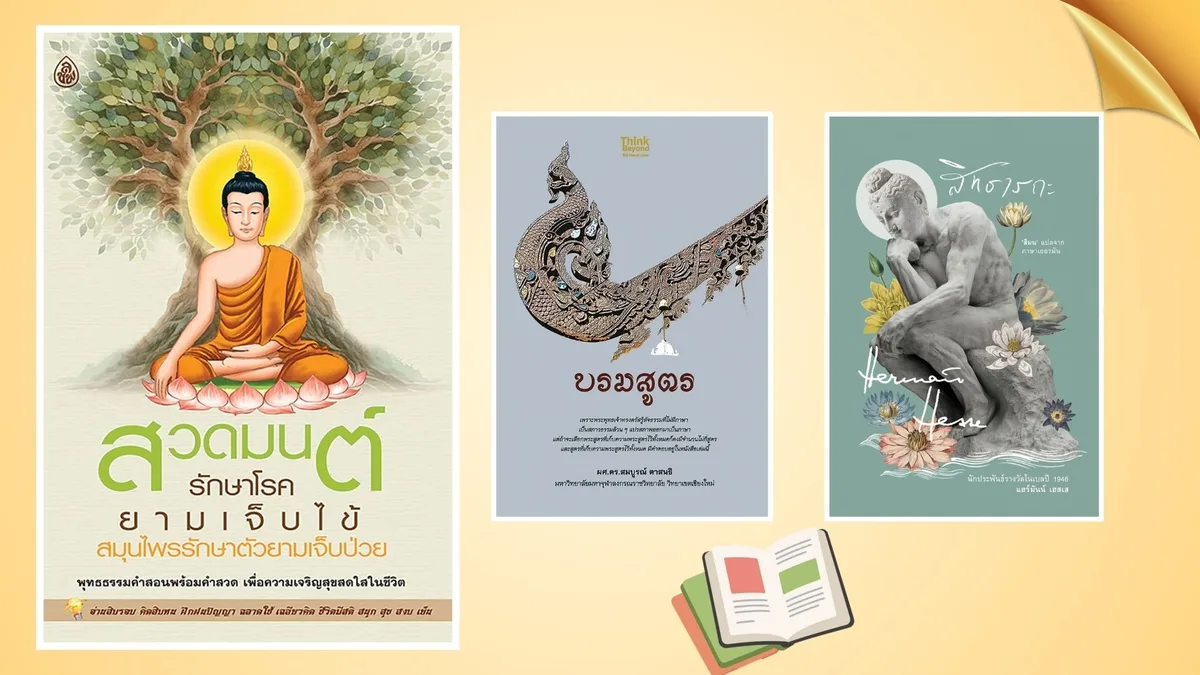
The book 'Chanting to Heal When Sick' is authored by the editorial team of Liang Chiang Publishing House and published at 18 baht. When discussing illness, there are two main types: physical and mental disease. Buddhist teachings function like medicine. Buddha was known as Bhaisajyaguru, the healing physician who used sacred medicine—the Dharma Osatha he discovered. The Buddhist community inherits this medicine prescription and shares it with others. Teaching Buddhist principles is like prescribing spiritual medicine, which must be done correctly to avoid harm. For complete and immediate results, the Buddhist medicine must be prescribed in three complete components: (1) identifying the medicine—the theoretical teachings Buddha presented for study; (2) explaining how to use it—the practical application of knowledge gained from study; and (3) describing its benefits—the results obtained from practicing these teachings. This book presents the method of 'chanting to heal the mind when sick' as Buddhist medicine, organized according to these three components: identifying the medicine by explaining its origins and meanings with translations and chanting instructions; explaining application through complete practical guidance; and describing benefits from following the teachings. The book aims to help readers achieve both physical and mental well-being through dedicating time to meditation, chanting, understanding the meanings, and following the recommended practices. The column also introduces two other books: 'Don't Forget—Know Yourself?' by Chaiyaphat Thongkambhang (160 baht) from Athing Book, which explores the importance of self-awareness and questioning one's life purpose; and 'Bromasuttha' by Sombuun Thasanthi, which discusses the comprehensive Buddhist scriptures, noting that the Tripitaka contains 84,000 Dharma teachings—82,000 from Buddha and 2,000 from monks—divided into 45 volumes with 25 being sutras.

No. 05 of Read at source → Next
Community

Rare Amulet of Revered Monk Luang Pho Ding Released

A rare amulet of Luang Pho Ding, a revered monk who led Wat Usupharam in Chachoengsao from 1897 to 1952, has been released for collectors. The first-edition copper pendant from his 1938 birthday ceremony is now highly sought after for its s

Rare Amulet of Revered Monk Luang Pho Ding Released
2d ago Khaosod

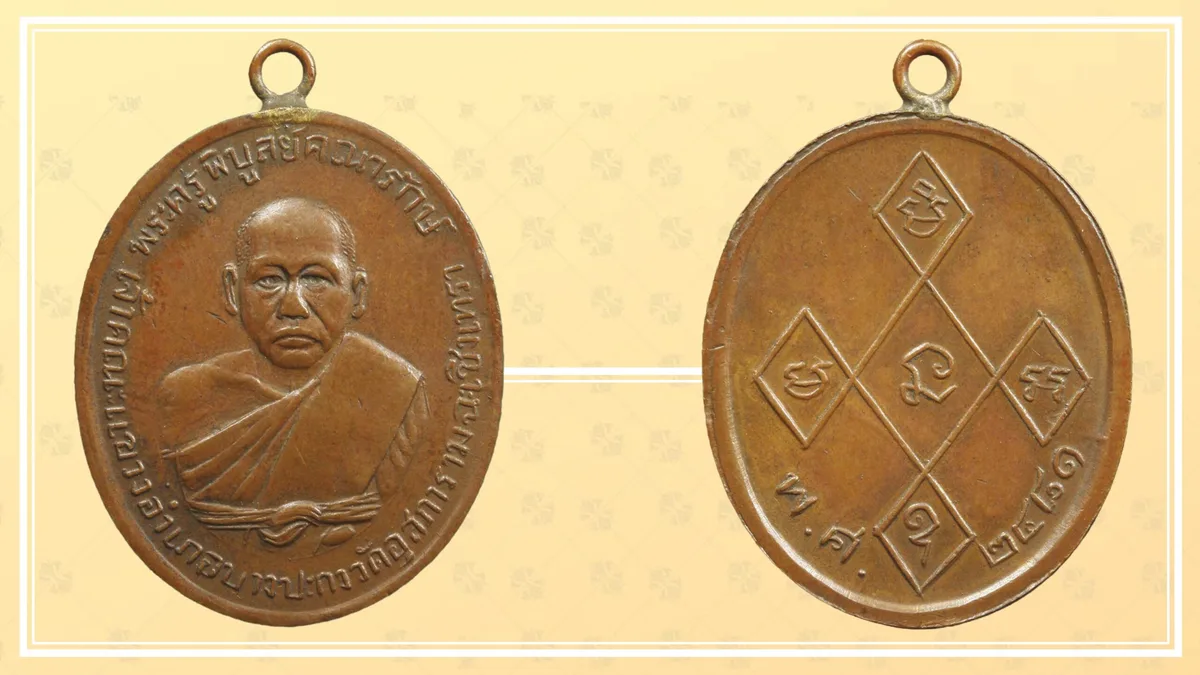
Venerable Phra Kru Pibul Khana Rak, also known as Luang Pho Ding Khangkhsuvanno, was the former abbot of Wat Usupharam (Bang Wa) in Bang Pakong District, Chachoengsao Province. He was born on March 14, 1877, at Bang Wa and was ordained at age 20 on April 10, 1897, at Wat Bang Wa's ordination hall under Phra Ajarn Dit Phromsaro of Wat Bang Samak. His monastic name Khangkhsuvanno means "one whose mind is cool like a river and strong like gold."

He was a senior monk known for strict discipline, profound compassion, and mastery of all Buddhist doctrines and teachings. His amulets became widely cherished among devotees and collectors across generations. He passed away peacefully on August 6, 1952, at age 75 with 55 years of monastic service.

His amulets gained tremendous popularity among collectors, particularly the first-edition copper image pendant created in 1881 during his 61st birthday merit-making ceremony, when he received the ecclesiastical title Phra Kru at the provincial level.

The amulet is an oval-shaped medallion with raised edges. The front features a portrait facing forward, surrounded by Thai script reading: "Phra Kru Pibul Khana Rak, Provincial Ecclesiastical Chief of Bang Pakong District, Wat Usupharam, Chachoengsao." Notable features include curved defects on the upper ear lobes, a cross mark on the neck, three fish-egg marks on the right cheek, and the lower left edge splits into two branches. The reverse side displays a yantra with Khmer characters "Mi Ma Na A U," with the year "B.E. 2481" at the bottom, where the "S" in the era mark has a crack extending upward. The left yantra border has a touched edge mark.

Legend speaks of his exceptional experiences, including stories of great compassion, miraculous protection, and steadfast virtue. Today, his amulets are increasingly rare and highly valuable.

No. 06 of Read at source → Next
National

Five Faiths Hold Memorial Services For Princess Sirindhorn

Thailand's five officially recognized religions—Buddhism, Islam, Christianity, Hinduism-Brahminism, and Sikhism—are holding coordinated memorial services nationwide to honor Princess Sirindhorn's legacy and dedication to religious equity. E

Five Faiths Hold Memorial Services For Princess Sirindhorn
2d ago Khaosod

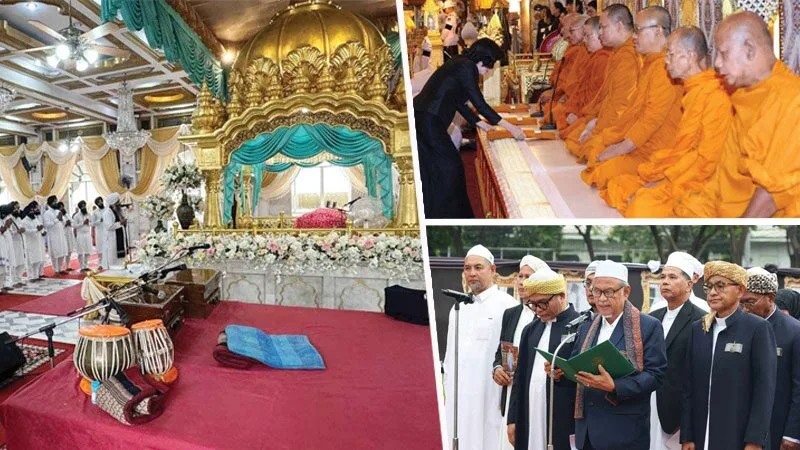
The Ministry of Culture's Department of Religion has coordinated with leaders of Thailand's five officially recognized religions—Buddhism, Islam, Christianity, Hinduism-Brahminism, and Sikhism—to establish religious observance guidelines for followers nationwide. These guidelines allow people of all faiths to pay their respects, reflect on the compassion of Her Royal Highness Princess Maha Chakri Sirindhorn, and perform religious duties according to their beliefs as an offering of merit. Princess Sirindhorn has been notably dedicated to promoting and nurturing religious affairs equitably, consistently supporting the activities of all state-recognized religions.

Each faith has developed appropriate activities and practices aligned with their teachings, including recitation, meditation, prayer, merit-making, religious observances, dissemination of her royal legacy, and activities adapted to the mourning period.

Buddhism: The Supreme Sangha Council issued a special resolution establishing guidelines for merit-making ceremonies dedicated to Princess Sirindhorn. Temples nationwide and Thai temples abroad are to conduct ceremonies including Buddhist chanting, scripture recitation, meditation, and dharma practice, with the public invited to participate. Activities are scheduled at 7, 15, 50, and 100-day intervals.

Islam: Islamic leaders nationwide have called on Muslims to pay respectful tribute through dignified dress following government guidelines, observed silence, and to emulate the Princess's dedication to nation and people as a life example.

Christianity: Christian organizations including the Thai Roman Catholic Bishops' Conference, Thai Church Council, Thai Christian Fellowship, Baptist Church Foundation, and Seventh-day Adventist Church Foundation are holding prayer services and worship ceremonies according to their traditions, lowering flags to half-mast, wearing mourning attire, and disseminating information about the Princess's legacy.

Hinduism-Brahminism: The Office of Royal Brahmin, the Brahmin shrine for Bangkok, and Hindu organizations are conducting religious ceremonies and prayers as merit offerings, displaying images, and observing commemorative events at 50 and 100-day intervals with flags at half-mast and mourning dress. The Hindu Association, Thep Monthian Temple, and Bharata Vidyalaya School are reciting mantras and the Bhagavad Gita.

Sikhism: Sikh organizations nationwide are inviting followers to recite prayers, practice meditation, and conduct religious ceremonies as merit offerings at 7, 15, 50, and 100-day intervals, with opportunities for the public to sign condolence registers.

No. 07 of Read at source → Next
Community

Venerable Luang Pu Suk Remembered Five Years On

The fifth anniversary of Luang Pu Suk's death is observed Saturday, honoring the revered former abbot of Wat Pa Waai in Sing Buri Province who transformed the temple through decades of devotion to Buddhist practice and monastic discipline.

Venerable Luang Pu Suk Remembered Five Years On
2d ago Khaosod

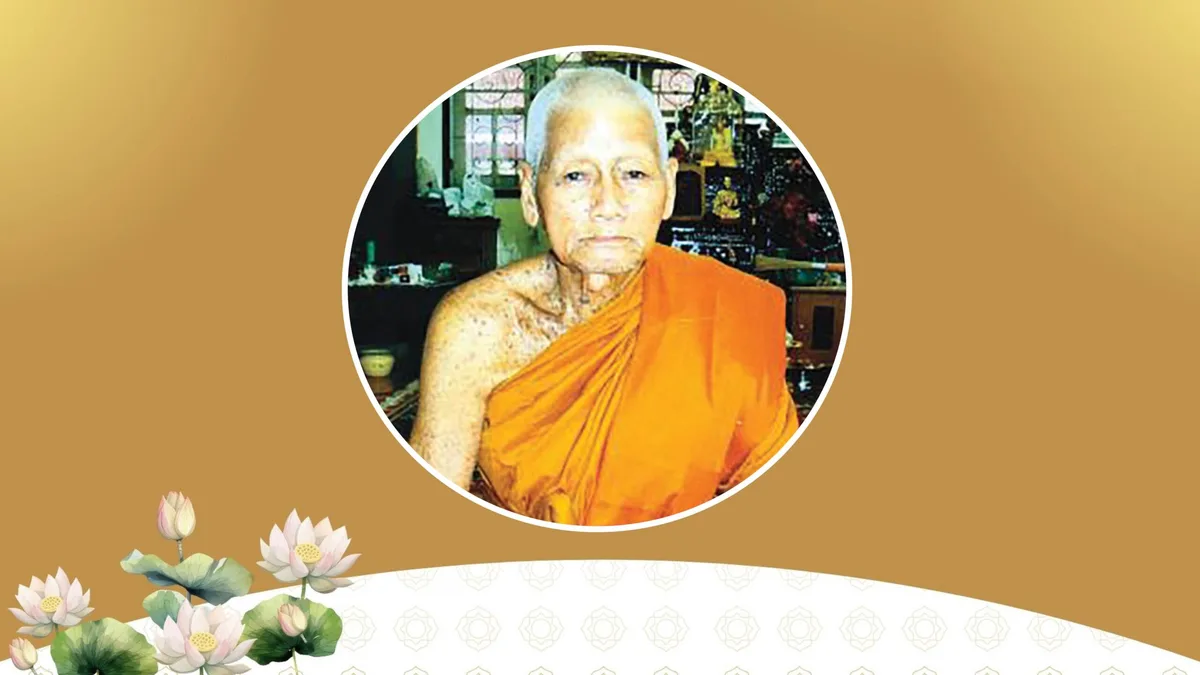
Saturday, July 4, 2026 marks the fifth anniversary of the passing of Phra Kru Suk Kit Banhar, or Luang Pu Suk Sukpepo, the former abbot of Wat Pa Waai in Sing Buri Province, a venerable monk deeply revered by the people of Sing Buri.

Originally named Suk Nai Chang, he was born on Friday, June 14, 1929 at house number 71, moo 1, Rong Chang subdistrict, Phrom Buri district, Sing Buri Province, as the second of seven siblings. Though his family lived in poverty, he was cheerful, well-behaved, creative, and beloved by family and friends. He completed his compulsory education at his local school.

At age eight, his father passed away, leaving him orphaned. His mother entrusted him to Luang Pho Phiu Kandachato of Wat Pa Waai, who raised and educated him. During this time, Luang Pho Phiu taught him meditation and insight practices while he was still a layperson, instructing him to meditate each evening at 7 PM after finishing his homework.

At age 14, recognizing his interest in Buddhism, Luang Pho Phiu ordained him in 1943. He traveled by ferry to Wat Phi Si, approximately 25 kilometers away, a journey of about one hour, to study Buddhist texts under Phra Kru Phi Si (Luang Pho Suthee).

Upon turning 20, he took higher ordination at the Buddhist precinct of Wat Pa Waai on March 7, 1949, receiving the ecclesiastical name Sukpepo. Phra Kru Phrom Chariykun (Luang Pu Dee Thammapanyo) of Wat Chang Phrom Nakhon served as his preceptor, with Luang Pho Phiu as his instructor and Phra Adhikarn Saeng of Wat Phi Si as his witness. He remained at Wat Pa Waai, studying Buddhist scriptures and serving his teacher Luang Pho Phiu.

Learning of the reputation of Luang Pu Dee, whom Sing Buri residents recognized as an outstanding master teacher, he walked from Wat Pa Waai to pay respects and seek advanced Buddhist studies, eventually becoming highly proficient.

In administrative duties, he served as acting abbot in 1962, was formally appointed abbot of Wat Pa Waai in 1964, became an instructor in 1964, district sangha administrator in 1972, and preceptor in 1977.

For ecclesiastical rank, he was elevated to Phra Kru Sannya Bat third class with the title Phra Kru Suk Kit Banhar in 1978, and to second class in 1984.

Beyond his expertise in Buddhist texts and administration, he possessed remarkable development abilities. When appointed abbot in 1964, Wat Pa Waai had only four monastic huts. He subsequently undertook extensive construction and renovation projects, permanently restoring the ancient temple's structures, all achieved through genuine merit-making.

He was strict in monastic discipline, lived simply and contentedly, showed compassion, spoke little but with kindness, and was generous. He often taught: "One teaching from my teacher I shall never forget is the constant practice of meditation and mindfulness—strengthening and steadying the mind. When the mind is concentrated, everything becomes good."

Though famous for his auspicious amulets, he never boasted, instead continually teaching people to live with mindfulness.

He passed away from old age on July 4, 2021 at age 92, having been a monk for 72 years.
No. 08 of Read at source → Next
National

Martinez Backs Spain as Underdog Before World Cup Knockout

Portugal advanced to the 2026 World Cup Round of 16 after beating Croatia 2-1, where coach Roberto Martinez acknowledges his team faces Spain as underdogs in their upcoming knockout clash on July 6.

Martinez Backs Spain as Underdog Before World Cup Knockout
2d ago Khaosod

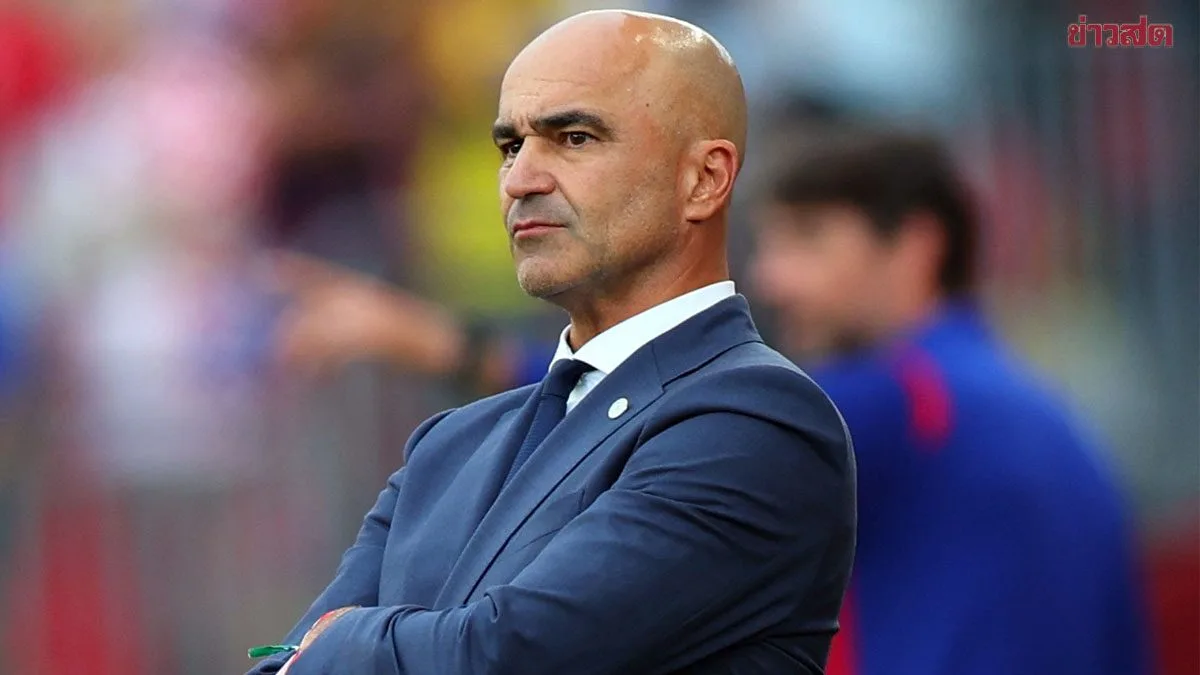
Portugal coach Roberto Martinez admitted his team are underdogs against Spain in the 2026 World Cup Round of 16, while explaining why he substituted Cristiano Ronaldo late in the game.

Portugal beat Croatia 2-1 on July 3 to advance to the Round of 16, where they will face Spain on July 6.

After the match, Martinez commented on his team's performance and the upcoming Spain contest, saying: "We're satisfied and proud, and now we need to begin our recovery period because the next match is coming soon."

"The first half was the best first half we've played in this World Cup in terms of intensity, structure, and our determination to control the game against a team that possesses the ball more. We just lacked goals. In the second half, the game unfolded in two different ways."

"I love talking about dreams because since childhood we've dreamed about this, and of course we must keep dreaming. As a coach, I need to pave the way to make that dream reality. I know we're not favorites against Spain because teams that have won the World Cup before have psychological advantages. But I believe we've developed and grown both internally and externally. It's a very difficult match. Our dream continues."

Martinez also explained his decision to substitute Ronaldo late in the game despite the score being level: "We were taking a big risk playing with two forwards, but we needed an extra midfielder. So we took Ronaldo off."

Croatia coach Zlatko Dalic said: "We didn't deserve this result. Conceding a goal in the final minutes of the match is not easy, but we should have handled this situation better."

No. 09 of Read at source → Next
Community

Thai Thriller 'Morte Cucina' Serves Revenge Through Cuisine

A Bangkok waitress seeks revenge on her former lover through carefully designed Thai meals in the psychological thriller 'Morte Cucina,' which debuts in Thailand after successful international festival runs and distribution deals in over tw

Thai Thriller 'Morte Cucina' Serves Revenge Through Cuisine
2d ago Khaosod

After touring international film festivals and selling distribution rights to over twenty countries worldwide, the Thai psychological thriller-drama 'Morte Cucina' is now being released for Thai audiences.

'Morte Cucina,' directed by Anucha Boonyawattana (Tom), features world-renowned cinematographer Christopher Doyle as director of photography. The cast includes Bella Thanatchaporn Bunsang as 'Saow' (the female lead), Kritsana Sriphumiset as 'Korn,' Napchai Chainam (Peter) as 'Doctor Arun,' and Tadanobu Asano as 'Katsu.'

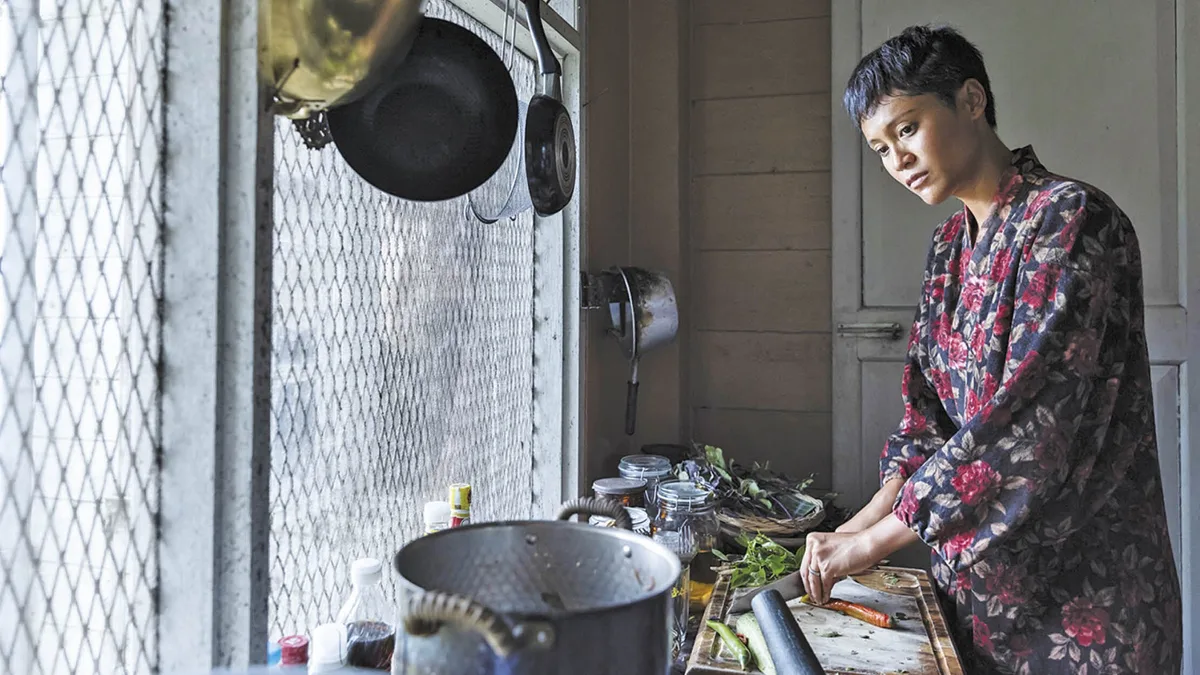
The film tells the story of 'Saow' (Bella), a Bangkok waitress with a talent for traditional Thai cooking. One day, she unexpectedly encounters 'Korn' (Kritsana), a young man who deeply wounded her in the past. This encounter awakens long-buried resentment and triggers a revenge plot. She becomes the perfect housewife and dutiful spouse, preparing meals for him daily—but each dish carries death through carefully balanced ingredients based on knowledge of elemental properties, slowly destroying his health in cold calculation without relying on poisons.

Director Anucha revealed the film's concept: "In this film, Thai food is a main character. The idea came from that premise. I read a news story about a woman who killed her husband through food, but she used poison and got caught. So I thought, how could we kill someone without getting caught? I consulted with various chefs who explained there are ways to design it so he dies within a specific timeframe—they could create a menu for that."

Regarding casting, Anucha explained: "Casting has always been risky for me. I never feel completely confident. I have to talk with each actor individually. Bella said she was confident. Kritsana also said he was confident because he could internalize the character through the script. Peter—no need to mention him, I'm confident in him. When these people are together, it works. So I thought, let's take the risk. The result wasn't just confidence—they actually delivered."

When asked why they accepted the roles, Bella said: "Once I saw it was Phi Tom directing, there was no need to think—just whether he would choose me. I admit the script wasn't easy at first. I did my homework by talking extensively with Phi Tom and the casting director, which helped tremendously. The difficulty wasn't about being a chef, but the emotional complexity. The character's emotional world is completely different from my own, but we share one thing—determination."

Kritsana, who hasn't acted in over twenty years after becoming a professional chef, revealed: "As you know, I've been out of entertainment pursuing my culinary passion. Phi Tom's producer contacted me and told me this was a film about food. The moment I heard that word, I felt like a gift from heaven. When I actually started, the role challenged me greatly. I had to lose weight to 65kg, then gain to 75kg within a month and a half. This project transformed me in many ways, and working with Phi Tom felt like entering another world."

Finally, Peter Napchai, an experienced actor, stated: "For me, each new film is completely new and challenging. Working with Phi Tom..."

No. 10 of Read at source → Next
Regional

Phuket Trains Officials On Avoiding Misconduct

Phuket's Provincial Office held a training program this week to educate civil servants on avoiding misconduct as the region faces multiple investigations into official wrongdoing.

Phuket Trains Officials On Avoiding Misconduct
2d ago The Phuket News

PHUKET: As Phuket continues to grapple with a string of high-profile investigations involving alleged misconduct by public officials, the Provincial Office this week organised a training programme aimed at helping civil servants avoid disciplinary offences.

No. 11 of Read at source → Next
Loading more…
Endless reading Scroll to read. When you reach the bottom, keep scrolling. A bar fills, and the next story slides in when it's full.
↑ ↓ or Space